Institutional · DynaStore programme since 2023; identity design published in 2026
GeoID: feature identity independent of storage
Identity architecture within FAO geospatial platform work
GeoID is the feature-identity design within DynaStore’s geospatial work. It separates the identity of a feature from the catalog, collection and backend identifiers used to locate or serve it.
Catalog names, storage names and URLs can change as data moves or systems evolve. If these locations are treated as feature identity, a move can look like a new entity to clients and downstream representations.
The design problem is keeping domain identity stable while allowing catalogs, collections and storage drivers to retain their own responsibilities.
Architecture: resolve external references to domain identity
The inspected DynaStore source distinguishes canonical feature IDs from external catalog/collection identifiers and backend document/index names. Write boundaries resolve external references to immutable internal IDs before persistence.
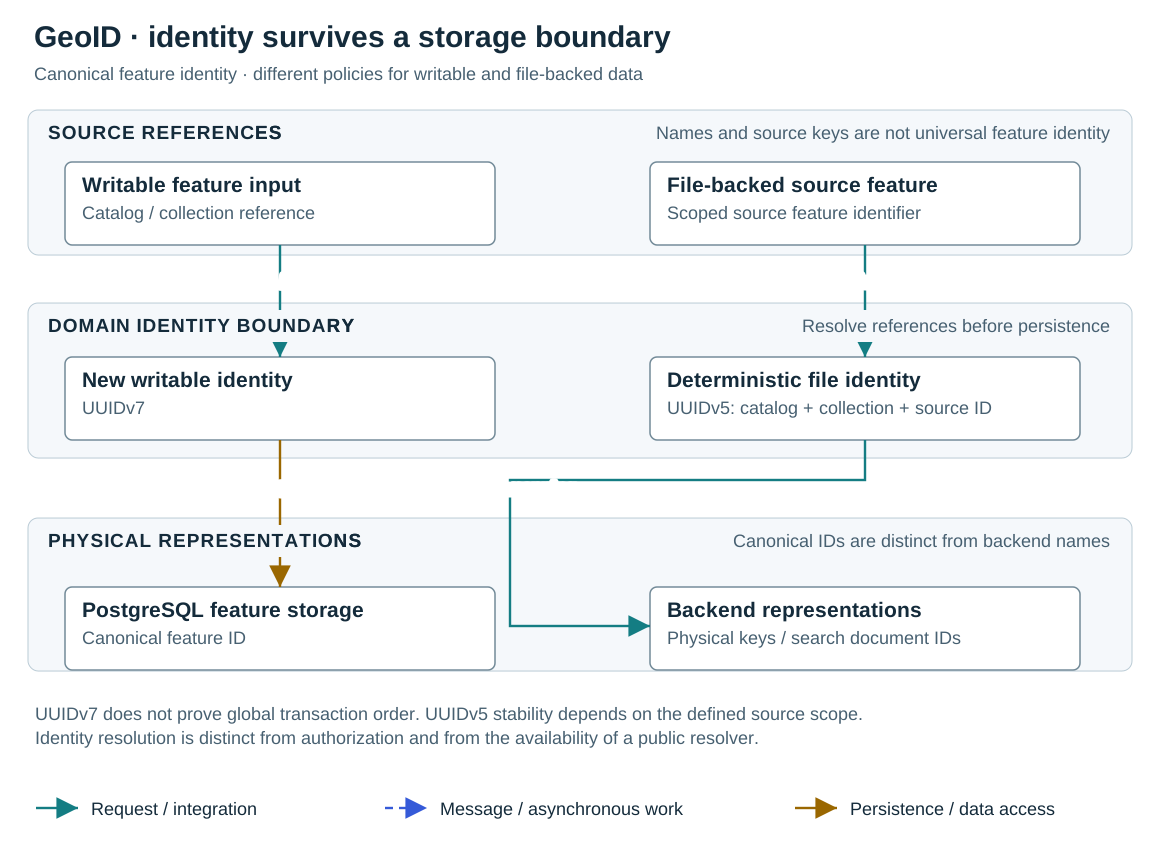
New writable feature identities use UUIDv7. File-backed features derive deterministic UUIDv5 identities scoped by catalog, collection and source feature ID. These are different identity policies for different source capabilities.
Domain identity across source and storage boundaries
External catalog/collection references and source feature IDs enter a resolution boundary. Canonical feature identity is kept separate from PostgreSQL keys and search document/index names. Writable and file-backed identity policies are deliberately distinguished.
Decisions: stable identity is not global ordering or permission
The writable identifier helper describes process-local monotonic behavior and random bits. A UUIDv7 identity is not proof of global transaction ordering, cross-process sequencing or authorization.
Deterministic file identity needs a clear source scope: catalog, collection and source feature ID. A retrospective alternative is deriving identity only from a raw source ID; it is simpler but loses that scoping and can collide across independently named sources.
Outcomes: an identity boundary visible in source
The inspected repository contains identity helpers and item service boundaries supporting this distinction. A published technical article explains the GeoID design.
This case describes source mechanisms and architectural intent. It does not claim all public references are resolvable forever, every data migration is transparent, or identity generation itself enforces access control.
Learning: keep identity, resolution and access distinct
A persistent identifier is useful when the surrounding system can explain resolution, changes and access. Its format alone cannot guarantee those policies.
For further validation I would test source moves, catalog renaming, external-ID reuse and deterministic identity across file reloads, then inspect each authorization boundary independently.
Questions & discussion
Why two UUID strategies?
Writable features need new domain identities. File-backed features can derive identities from a stable scoped source reference. Their guarantees are different and should be tested separately.
Inspected snapshot 4da3f58bf704b26dec8191794fe98d364dc16eaa; FAO programme with colleagues; identifier and item service contracts in supplied inspected research