Statistical Working System: engineering around statistical methods
Statistical Working System expert and technical delivery contribution, FAO Statistics Division
My SWS work connected a modern frontend, R-based statistical processing and repeatable software delivery. It combined CI/build/release pipelines and SDLC responsibilities with institutional engineering alongside statisticians and an international software team.
Problem: statistical methods need usable, repeatable software
Corporate statistical processing connects inputs, methods, review and output. The official FAO project description distinguishes the Statistical Working System’s throughput role from the Statistical Data Warehouse’s output role.
My 2015–2018 contribution focused on engineering within that system: frontend modernization, R-based processing, CI/CD and software delivery practices. It should not be confused with later SWS redesign work described in current FAO material.
Architecture: interaction, methodology and delivery
My work included React, Redux and TypeScript frontend development, with R processing pipelines in the statistical workflow. Public methodology documentation describes SWS R modules and the datasets, code lists and tables that support them.
My delivery responsibilities included CI solutions, designing and maintaining build and release pipelines, and implementing the SDLC with the delivery team. Frontend framework patterns and test strategies supported reviewable changes and repeatable releases.
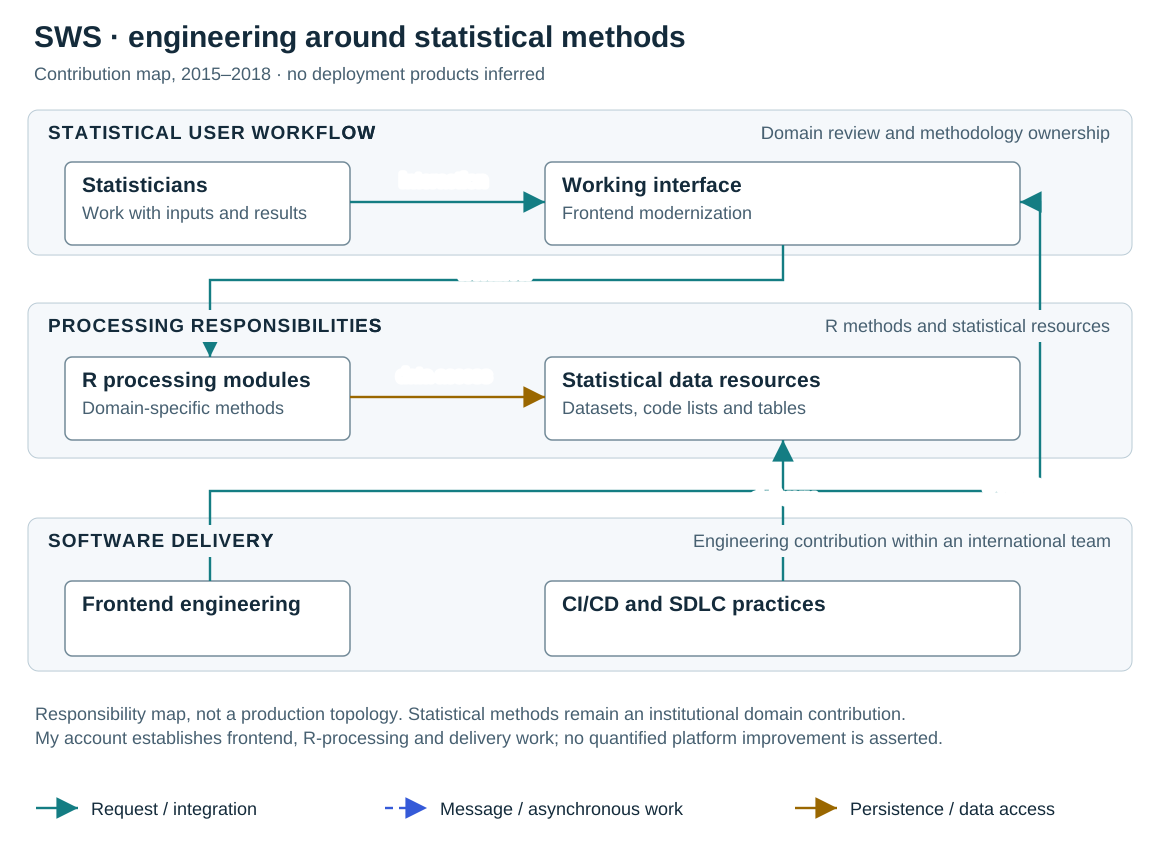
The diagram maps contribution responsibilities rather than an unverified runtime deployment. The statistical method remains a domain responsibility; frontend engineering and software delivery make it usable and repeatable.
Statistical workflow and engineering responsibilities
The conceptual map connects statisticians’ working interface with R methodology and statistical datasets. A separate software-delivery lane supports the frontend and processing code. It describes contribution scope without inventing schedulers, queue products or deployment services.
Decisions: improve delivery around domain methods
A statistical platform needs the method’s domain meaning to survive interface and delivery changes. My contribution combined frontend work with R pipelines and delivery practices rather than attributing the statistical methodologies themselves to software engineering.
My role included support for day-to-day QA and production platform management, unit tests for enhancements and fixes, validation procedures, and technical input to operational handover and maintenance.
For a retrospective comparison, I would consider a collection of individually run scripts and disconnected interfaces. It can support rapid experiments but makes shared review and repeatable releases harder. The engineering question is how to retain methodological flexibility while improving the workflow around it.
Outcomes: a contribution to a corporate platform
My professional account and reviewed role records place the frontend, processing and delivery contribution in 2015–2018. FAO’s public project material establishes SWS as a corporate statistical-processing platform; methodology repositories illustrate the R-based domain.
The institutional project report records the wider team’s introduction of release methodology, automated testing and deployment, and production migration of statistical components. It also records performance constraints during rollout. These are team and platform outcomes, separate from my assigned duties and personal contribution.
This case makes no quantitative claim about efficiency gains, statistical accuracy or adoption resulting from my contribution. The platform and statistical outputs are institutional work with many contributors.
Learning: technical leadership includes domain translation
Statisticians and software engineers need a shared explanation of what an operation changes and how its result is reviewed. Good delivery practices support that conversation; they do not replace methodological judgement.
For a new processing workflow, I would make input versions, method versions, result review and release reproducibility explicit validation targets. These are present-day review considerations, not invented historical incidents.
Questions & discussion
Which part did you personally contribute?
React/Redux/TypeScript frontend development, R-based processing, CI/build/release pipelines and SDLC work within the SWS team during 2015–2018. My role also included QA/production support, testing and technical input to operational handover.
Read the relevant sectionDoes this diagram establish the production topology?
No. It maps evidenced contribution responsibilities. The inspected sources do not identify a complete deployment topology or scheduler contract.
Read the relevant sectionHow does engineering support statistical quality?
By making the method, inputs, interface behavior and delivery reviewable. The statistical methodology and its validation remain domain responsibilities.
Read the relevant sectionSources & scope
- FAO Statistical Working System project
Official project description inspected October 2026; FAO; later redesign is outside my 2015–2018 contribution
- SWS fisheries methodology documentation
Public methodology documentation inspected October 2026; Institutional methodology context, not individual authorship evidence
- Professional contribution context
2015–2018 contribution; supporting role records reviewed October 2026; Carlo Cancellieri; personal contribution account cross-checked against SWS role records and retrospective employment history. Institutional project outcomes are identified separately.